
A Ng15 layout by Charlie Stewart
Scale Gn15
Size 4’ x 2’
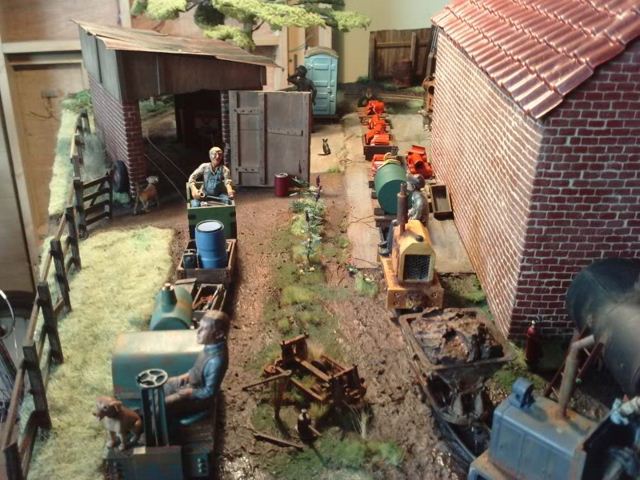
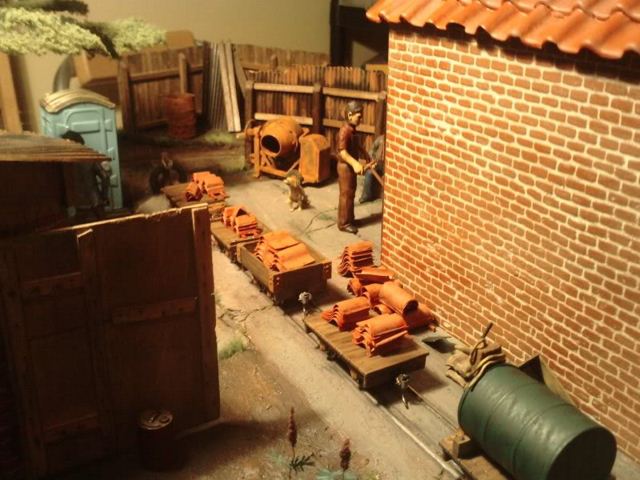
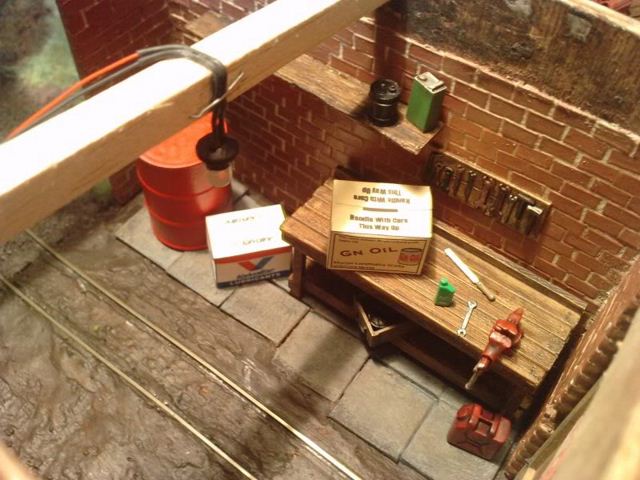
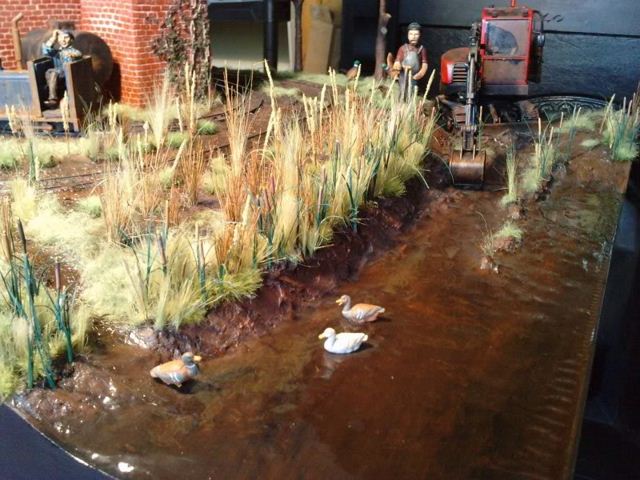
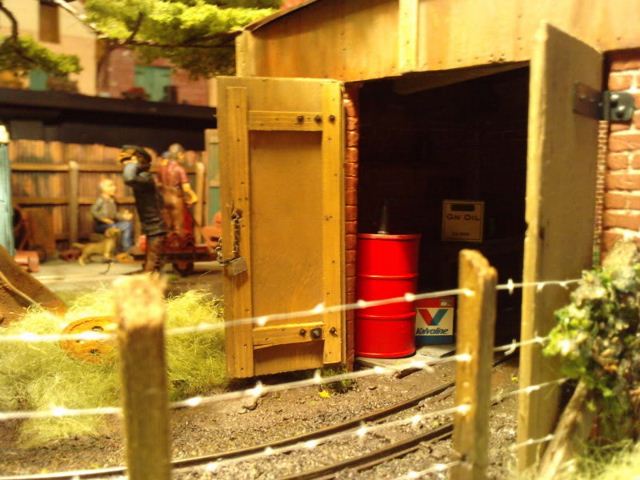
Recently I've spent much time on the Lincolnshire side of the Humber Bridge & its muddy banks. Many dog walks later I gave in to the tempation to attempt to model one of the small privately owned Tileworks that once lined this VERY muddy riverbank.....
https://www.narrowgaugenorth.org.uk/index.php/85-public-news/exhibitors-previous?start=120#sigProId569f4ccf9b
A 0n30 layout by Tony Kell
Scale 0n30
Size 12’ x 3’6"
Some time ago I got the On30 bug. I'm still not cured and so as a form of therapy I have built this layout which is loosely based on American prototype, set high in the mountains, where the Arithmetic Either Ore is mined. This is sent to "Algebra" down in the valley, along the narrow gauge line, where it is worked out. In addition to this, NO...no more mathematical puns! Enough!
Unfortunately the bears seem to have eaten all the Racoons, as I don't see any left in the hills around the mine, but there are a number of other critters scuttling about the place.
The layout is operated with a Lenz DCC system, and many of the locos have "on board" sound systems...chuff chuff chuff, clang, clang...you get the picture.
The track is PECO 7mm narrow gauge track painted and weathered to make it look old. The mountains are made of polyurethane foam boars cut with a carving knife, and coated with Artex prior to painting with emulsion paint.
Some of the buildings are American laser cut wooden kits
https://www.narrowgaugenorth.org.uk/index.php/85-public-news/exhibitors-previous?start=120#sigProId7cd2bac671
A 009 layout by Chelmsford Model Railway Club
Scale 009 (4mm/1ft)
Gauge 9mm
Size 9’ x 4’

https://www.narrowgaugenorth.org.uk/index.php/85-public-news/exhibitors-previous?start=120#sigProId73461f8d53
A 1:50 layout by Gordon and Maggie Gravett
Scale 1:50
Gauge 18.2mm
As seen on BBC 4 - 23/01/2012
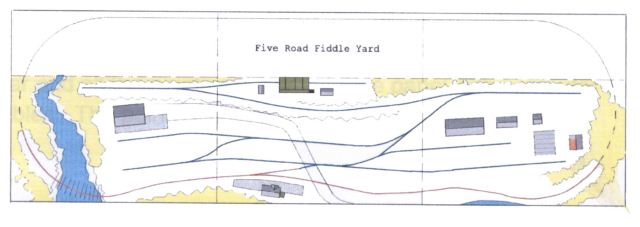
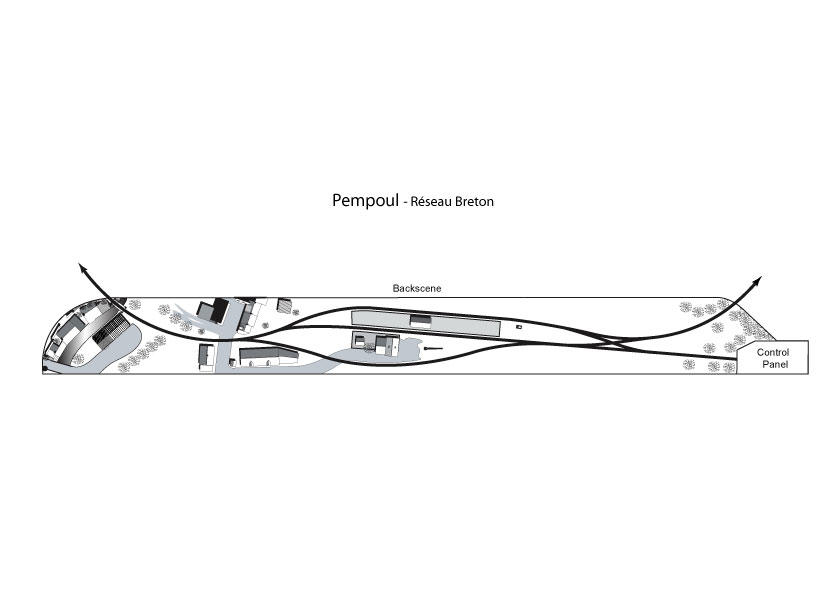
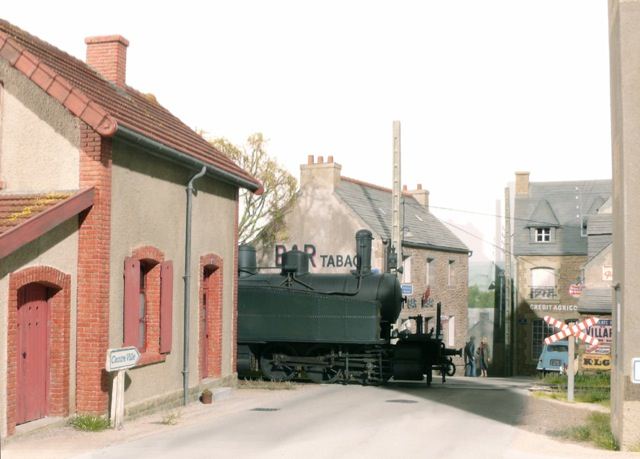
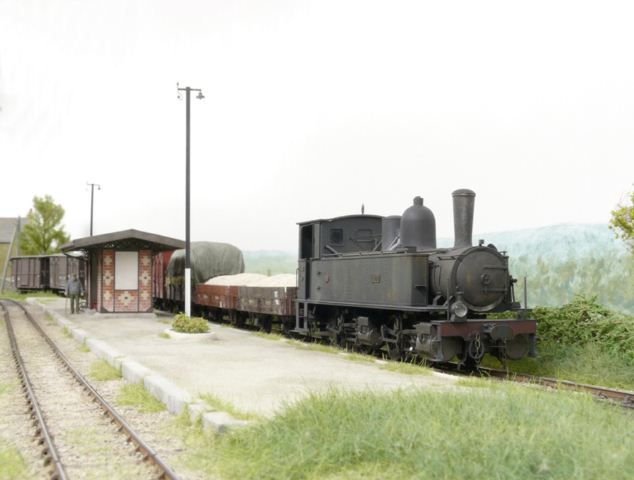
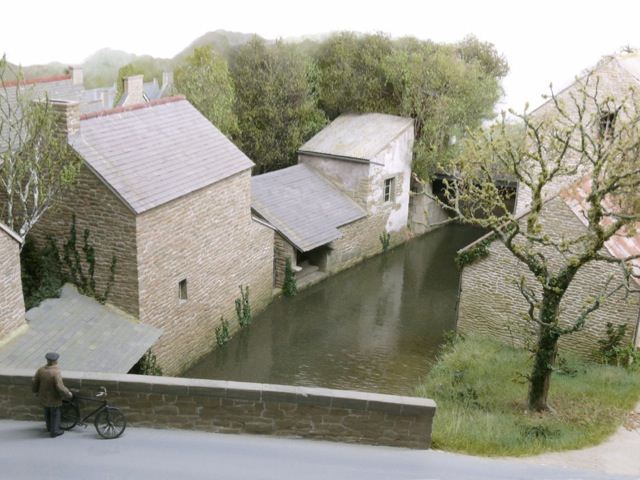
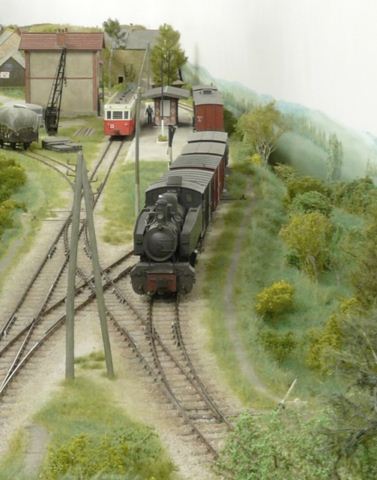
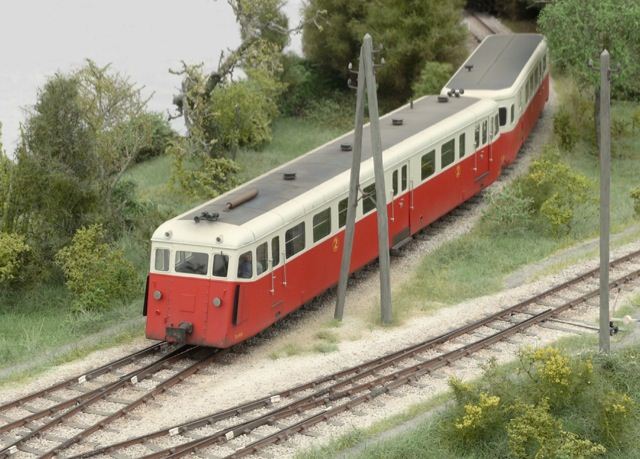
The metre gauge Reséau Breton system once served much of inland Brittany connecting rural villages and town to the SNCF main lines. It closed to all traffic in 1967. This fictitious scene depicts a small section of the railway in the last years of its life along with a taste of the area through which it ran.
There are very few (if any) commercial models or kits available for the Reséau Breton so, having accepted that everything was going to have to be built from scratch, we chose to build to a scale of 1:50. This had the advantage of giving easy to use metric dimensions: for example 1 metre = 20mm.
In an attempt to keep weight to a minimum, the baseboards utilise light weight Styrofoam (extruded polystyrene) in their construction. To the same end, the shells of the buildings are constructed from foam cored board and then covered with a thin layer of DAS modelling clay which is then scribed to represent the stone and brick of the area. Much use has also been made of the Noch ‘Gras-Master’ to give a realistic covering of ‘static grass’ to the landscape.
Having stated 20mm equates to 1 metre it may seem a contradiction to then build the track to the well proven 18.2mm gauge (EM standards). I can live with this inaccuracy and it has saved many hours in what was always going to be a very long term project.
Life is very leisurely in rural France so please take time to look at the display book on the front of the layout or feel free to interrupt to ask questions.
https://www.narrowgaugenorth.org.uk/index.php/85-public-news/exhibitors-previous?start=120#sigProIdf3fefe117f